


 Home
Analysis of the US-Israel-Iran War Situation (VII): The War Tipping Point: Three Directions for the Iran Situation After the Postponement of US-Israeli Strikes
 2026-09-08
 1
(Note: This analysis is compiled from public media reports and official statements. All judgments are trend projections and do not constitute predictions or policy recommendations.) On May 19, 2026, the large-scale military strike scheduled for that day was halted at the last moment. Trump announced that the strike had been postponed "2 to 3 days" at the request of Saudi Arabia, Qatar, and the UAE, but stressed that this was by no means a concession—unless Iran offered a "better plan," the strikes would be "even more severe." The war clouds over the Middle East have not dispersed; they have merely shifted into a period of silence that could snap at any moment.
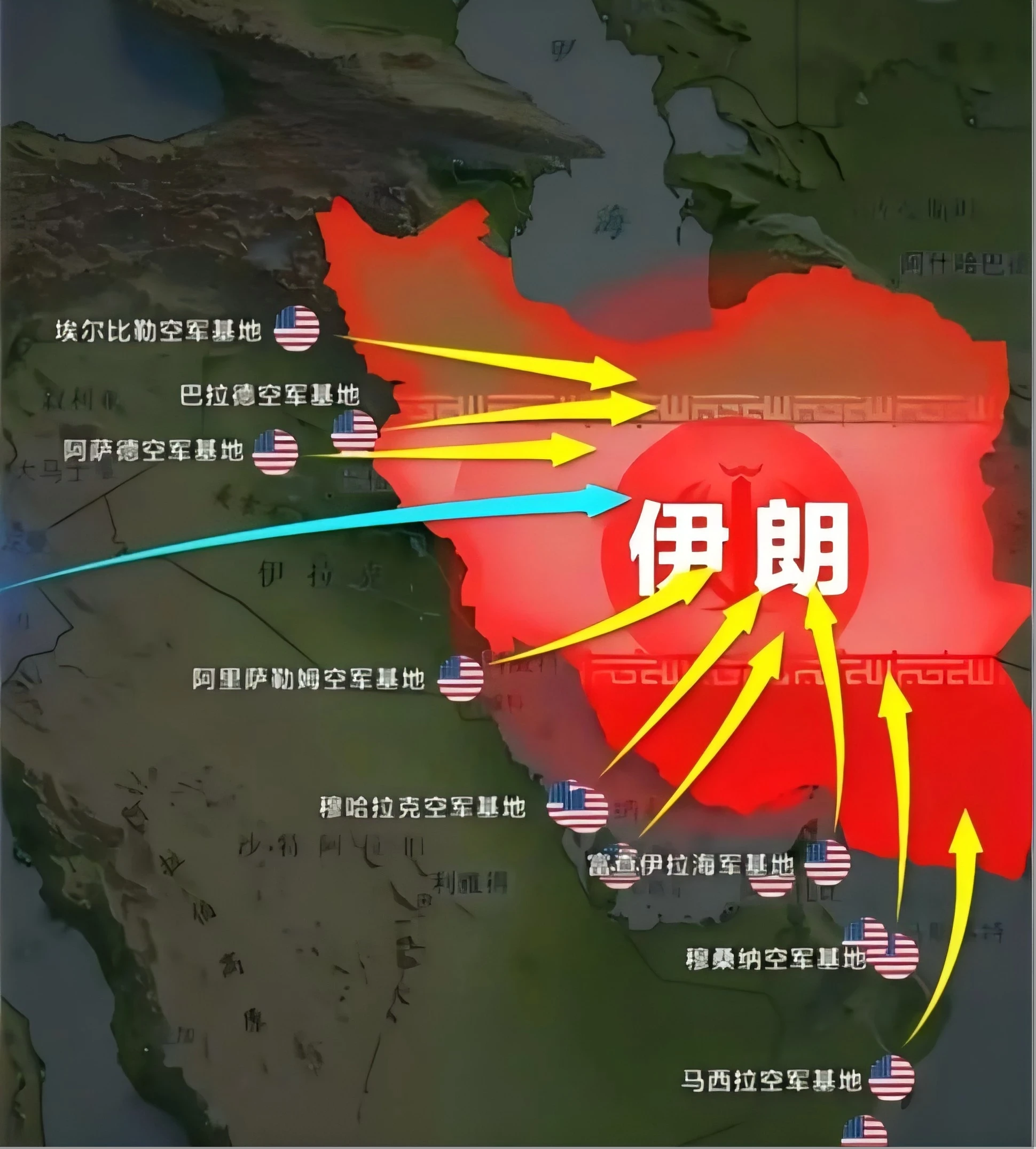
I. How the Situation Reached This Point
June 2025: Israel launched "Rising Lion" airstrikes targeting Iran's nuclear facilities. Iran withdrew from nuclear negotiations and retaliated against Israel and US military bases with missiles. February 2026: A large-scale joint US-Israeli airstrike killed Iran's Supreme Leader Khamenei. The Revolutionary Guard attacked 27 US military bases, and the conflict escalated across the board. March 2026: Iran's air force, navy, and air defense systems were severely damaged, but its underground nuclear facilities, long-range missiles, drone forces, and the main body of the Revolutionary Guard remained intact. Hezbollah, the Houthis, and Iraqi militias launched attacks across all fronts, with northern Israel, Red Sea shipping, and US military bases frequently coming under attack. April 2026: A brief ceasefire, and indirect negotiations began. The US demanded "complete denuclearization, abandonment of proxies, and reopening of the strait," while Iran responded with "an end to the war, lifting of sanctions, and compensation." The two sides' demands were completely parallel. May 2026: US forces in the Middle East rose to 50,000, dual carrier strike groups were in position, and strategic bombers were deployed to forward bases. Israel received large shipments of US-made munitions and entered a state of readiness for war. Around May 21 is the watershed between war and peace.
II. The Cards Held by the Three Parties
United States: With 50,000 troops, two carrier strike groups, and stealth bombers, its military superiority is absolute, and its target list is precise down to nuclear facilities, missile bases, and oil ports. But internally it fears "getting bogged down in the Iranian quagmire" and oil price shocks. Ultimate demands: complete denuclearization, dismantling the Revolutionary Guard, and ending the proxy network. Israel: Its F-35 fleet is intact and Mossad's penetration is deep, but its northern border comes under daily Hezbollah rocket fire. The Netanyahu government is pressing the US to "strike as soon as possible," with the goals of destroying Iran's nuclear capability, paralyzing its missile forces, and severely damaging Hezbollah. Iran: Its conventional military has been severely damaged, but its underground nuclear facilities, ballistic missiles capable of covering all of Israel, drone swarms, and proxy network remain intact. After Khamenei's assassination, hardline conservatives took control, and anti-US consensus has never been stronger. Its demands are firm: lift sanctions, retain nuclear rights, maintain influence over the strait, and never surrender unconditionally.
III. The Inextricable Deadlock
Zero-sum on the nuclear issue: The US and Israel demand permanent denuclearization, while Iran insists on retaining enrichment capability. Collision over regional hegemony: The US seeks to dominate the Middle East order, while Iran counters with its "Axis of Resistance" network. Hezbollah harasses northern Israel, the Houthis attack Red Sea shipping, and Iraqi militias strike US military bases—the proxy battlefield is already fully ablaze.
IV. Four Key Variables
U.S. decision (most critical): Trump faces a dilemma: strike and get bogged down in attrition, or refrain and suffer reputational damage. Whether he orders strikes to restart on May 21 is the decisive trigger. Iran's counterattack (decisive): saturated missile attacks on Israeli territory and U.S. military bases, blockade of the Strait of Hormuz, and all-out proxy fire. Once these are synchronized, the situation will rapidly spiral out of control. Roles of China and Russia: diplomatic condemnation, intelligence and logistical support, and energy-trade lifelines are almost certain, though the probability of directly supplying offensive weapons is relatively low. Even so, this is enough to give Iran the confidence to refuse surrender. Regional countries: Gulf Cooperation Council states such as Saudi Arabia are wary of Iran's expansion yet fear the flames of war spreading, and are urgently mediating to secure a postponement; Turkey and Egypt are neutral mediators; Israel, meanwhile, continues to push for action.
V. Three Scenarios
Scenario 1: Short-term strikes and sustained retaliation (probability about 45%)
Iran did not make concessions during the window, and the U.S. and Israel launched 3 to 7 days of concentrated airstrikes. Iran fired salvos of missiles and all proxies opened fire; shipping through the Strait of Hormuz was severely disrupted, and oil prices could spike to $120-150. Iran's nuclear capability was partially damaged but far from eradicated, and both sides became locked in long-term attrition.
Scenario 2: Frozen confrontation and intermittent negotiations (probability about 35%)
A tacit understanding was reached at the last moment: Iran suspends high-enriched uranium, and the U.S. suspends strikes and loosens some sanctions. Military pressure remains high but firepower does not escalate, and proxy conflicts cool down without ceasing. The nuclear issue is put on ice rather than resolved, and the region remains unstable over the long term.
Scenario 3: Full-scale escalation and regional chaos (probability about 20%)
Saturated missiles break through missile defense systems and hit Israeli cities; Israel retaliates fiercely; the Strait of Hormuz is completely blockaded; China and Russia step up their involvement. The Iranian regime is hit hard but does not collapse; Israel's security deteriorates severely; the U.S. sinks into a quagmire; and the global economy faces recession. There is a very small probability (less than 10%) of reaching a temporary ceasefire framework at the last moment, but the current gap in demands is too large, leaving almost no room for that.
Conclusion: Key signals at the tipping point
If war breaks out around May 21, the world will face a long-term hybrid war; if the standoff continues, it will merely exchange persistent unease for a fragile calm. The following signals deserve close tracking: whether Iran submits a new proposal through Qatar or Oman; whether U.S. aircraft carrier strike groups enter attack positions in the Strait of Hormuz; whether the scale of evacuations of residents in northern Israel expands; and whether China and Russia become unusually active in the Security Council and in shipments of supplies to Iran. The balance between war and peace is swaying violently under the Middle Eastern sun.

 OVERSEAS SECURITY AUDIT & ASSESSMENT
Before Going Global, Conduct a Security Assessment First
From pre-departure risk assessment to security management of overseas projects, we provide full support for corporate operations and personnel safety.
 Tel 18901559097
 Email sznsps@126.com