


 Home
Construction, operating mechanisms, and practical approaches of armed security systems for Chinese-funded projects in high-risk areas of Africa
 2026-09-08
 1
The geopolitical security landscape in Africa is currently undergoing profound and continuous adjustment, with composite security risks—including armed conflict, extremist attacks, organized crime, kidnapping for ransom, and mass community unrest—exhibiting features of normalization, high frequency, and complexity. The traditional passive protection model, which relies on host-country military and police forces and routine civilian security guards, can no longer meet the security needs of Chinese overseas projects in high-risk areas. In response to the structural shortcomings common in overseas security for Chinese enterprises—namely, "emphasis on emergency response over proactive forecasting, emphasis on manpower deployment over system building, and emphasis on practical experience over compliance management"—this paper, based on the full-lifecycle theory of risk management, constructs a professional armed security governance system suited to high-risk scenarios in Africa. It systematically clarifies the security risk mechanisms of overseas projects, the boundaries of compliant operations, the core capability matrix, and the full-process operating mechanisms, and distills replicable and actionable implementation pathways based on industry practice observations. The study shows that the core transformation logic of overseas security in high-risk areas of Africa is an upgrade from the traditional passive guarding model to a modern risk management model featuring proactive governance, systematic prevention and control, compliant operations, and closed-loop handling. This can provide theoretical support and practical basis for Chinese enterprises in building overseas security systems, governing local risks, and supporting government-enterprise decision-making. Keywords: high-risk areas in Africa; Chinese overseas projects; armed security; risk governance; full-lifecycle prevention and control; compliance management
I. Introduction
In recent years, the security situation in Africa's Sahel region, East Africa, coastal West Africa, and conflict-prone areas in the south has continued to deteriorate, showing distinctive features of composite risks, normalized attacks, organized crime, and covert conflicts. Civil wars and instability, regime changes, infiltration by extremist armed groups, armed highway robbery, kidnapping and extortion of foreign nationals, and mass community incidents occur frequently within the region, posing sustained and all-round security shocks to key Chinese-funded projects in energy, mining, infrastructure, industrial parks, and cross-border engineering. For a long time, Chinese overseas projects have generally adopted the traditional security model of "host-government backstop + local ordinary security guards." This model has low-cost advantages in low-risk, orderly markets, but in high-risk areas of Africa it exposes prominent institutional deficiencies: host-country law enforcement and military forces are weak, insufficiently deployed, slow to respond, and face notable integrity risks; conventional local security lacks professional armed response capabilities, systematic intelligence early-warning systems, and standardized emergency procedures, and cannot effectively counter current premeditated, group-based, and armed high-end security threats. Overseas security is the prerequisite baseline and core safeguard for enterprises' international operations. In high-risk operating environments in Africa, security work is no longer an auxiliary logistics support function, but a strategic risk management capability that runs through the entire lifecycle of project investment, construction, operation, crisis handling, and exit. Based on the industry's real pain points and the need for theoretical reconstruction, this paper builds a systematic, compliance-oriented, and actionable overseas armed security operating system, and constructs a theoretical paradigm and practical pathway for security governance of Chinese-funded projects suited to high-risk areas in Africa.
II. Structure of Security Threats and Risk Mechanisms for Chinese-Funded Projects in Africa
Security risks in high-risk regions of Africa are not simply the superposition of isolated incidents, but a composite risk system formed by the deep coupling of political risks, armed risks, criminal risks, social governance risks, and internal management risks. Based on regional security dynamics and industry practice, the core risks can be divided into six categories, forming a security threat map with clear hierarchy and targeted focus.
(I) Risk of Extremist Armed Groups and Systematic Armed Attacks
Extremist armed groups remain active over the long term in the Sahel region, northern Mozambique, northeastern Nigeria, Somalia, and other areas, and carry out targeted attacks with strong organizational capacity and tactical destructiveness against foreign-funded construction camps, production stations, and cross-border transport corridors. Such risks have high fatality rates and destructive impact, and belong to the Tier-1 high-risk category. Traditional human and physical defense measures can hardly provide effective protection; risk hedging must rely on advance intelligence forecasting, professional armed defense, and rapid mobile response systems.
(II) Risk of Organized Armed Robbery
Mature cross-border organized criminal gangs have formed in the Democratic Republic of the Congo, South Africa, and multiple West African countries, carrying out targeted armed robberies focused on high-value assets such as engineering equipment, fuel, precious metals, and cables. These criminal gangs have precise intelligence, well-equipped capabilities, and efficient operations, and commonly exhibit the characteristic of collusion between insiders and outsiders. Static protective measures such as physical fences and video surveillance alone cannot effectively block risk transmission and asset losses.
(III) Risk of Community Mass Conflicts and Local Disputes
Local issues such as project land acquisition, local employment allocation, ecological and environmental disturbance, and uneven distribution of benefits can easily trigger mass incidents such as surrounding and blocking by neighboring communities, vandalism of facilities, and illegal occupation of sites. Such conflicts are characterized by gradual escalation, emotional contagion, and involvement of external forces. If early communication is absent and disputes are handled improperly, they can easily escalate into large-scale violent incidents, directly leading to project suspension, asset damage, and personnel being trapped.
(IV) Risk of Professional Kidnapping and Ransom
An industrialized, chain-based kidnapping and ransom model has formed in West Africa, Central Africa, and the Sahel region, with frequent and repeated targeted kidnappings of Chinese management personnel, technical backbones, and foreign experts. Such risks directly impact the core operating team of projects and can easily lead to project standstill, damage to corporate reputation, and huge ransom losses. They are a key disruptive factor constraining the sustained and stable operation of overseas projects.
(V) Risk of Internal Collusion and Covert Theft
Compared with overt armed conflict, risks such as material theft, equipment resale, and leakage of confidential information caused by collusion between internal personnel and external criminal forces are more covert and long-lasting. Such risks exhibit a characteristic of "progressive blood loss," continuously eroding project operating efficiency. They are the main source of routine losses for overseas projects and also the weak link most easily overlooked by traditional security systems.
(VI) Risk of Political Turmoil and Abrupt Policy Changes
In some African countries, frequent regime changes and weak policy stability give rise to institutional risks such as revocation of business licenses, tax system adjustments, controls on foreign assets, and failed contractual performance. These can easily trigger project compliance crises and emergency personnel evacuation needs, forcing security systems to possess comprehensive capabilities for situational pre-warning, asset and personnel consolidation, and emergency evacuation. In summary: the traditional old security model of point-based deployment, passive guarding, and post-incident response can no longer adapt to Africa's compound, dynamic, and high-frequency high-risk environment. Building a full-cycle, systematic, and proactive professional armed security governance mechanism is the inevitable choice for the sound operation of Chinese-funded projects in high-risk regions.
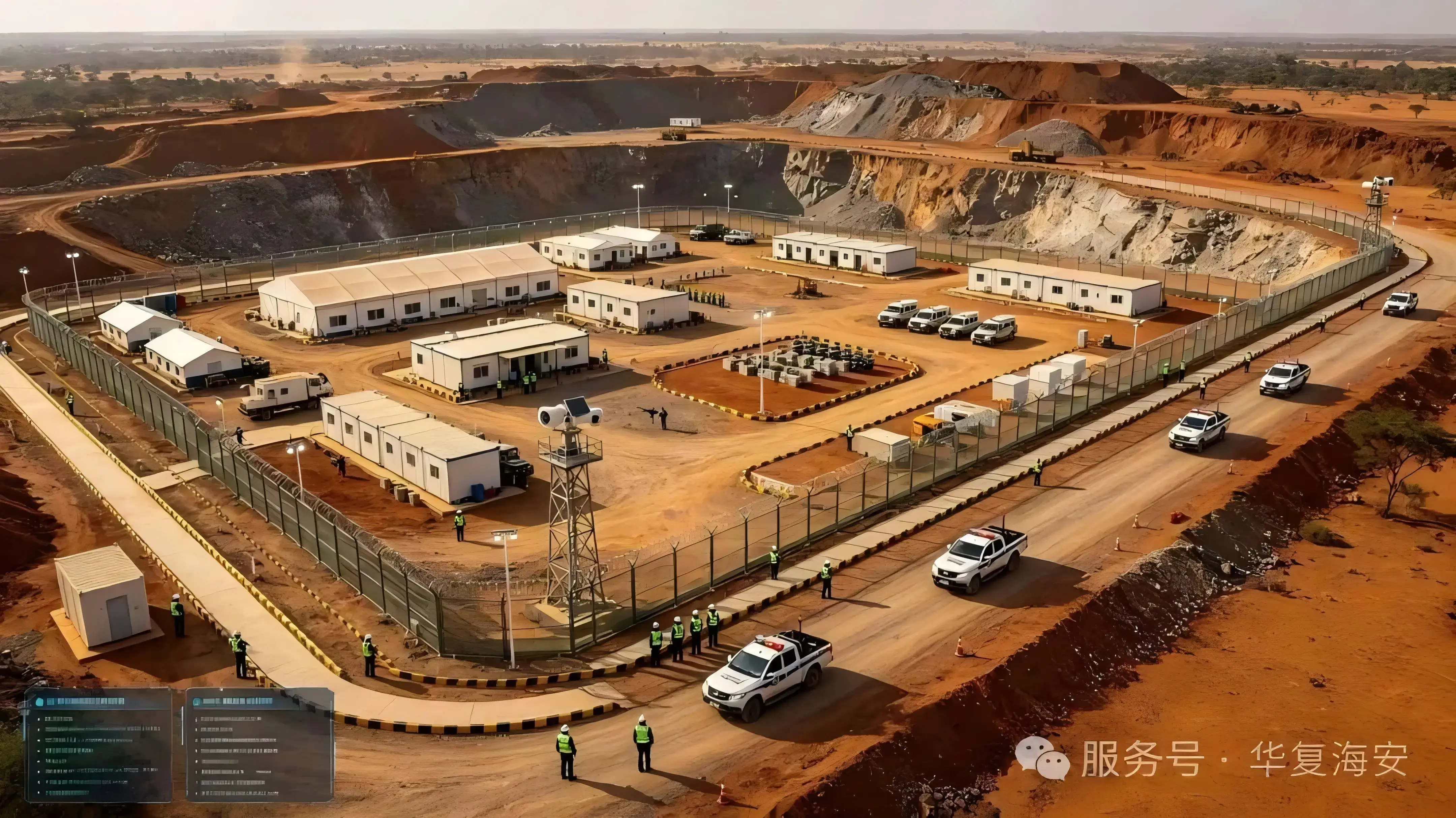
III. Building a Full-Cycle Embedded Armed Security System
With a focus on building a modern armed security system featuring "full-cycle embedding, tiered prevention and control, integration of personnel and technology, compliance as a backstop, and closed-loop handling," security governance is deeply embedded in the entire process of pre-project assessment, construction period, operation period, crisis response, and exit, achieving front-loaded risk resolution, dynamically controllable processes, and closed-loop handling of consequences.
(I) Pre-Project Stage: Front-Loaded Risk Assessment Mechanism
Front-loading security decisions is the core principle of risk control in high-risk regions. Before project implementation, comprehensive on-site regional security due diligence is carried out, completing threat source mapping, local power analysis, cross-border corridor risk assessment, and evaluation of the host country's military and police response capabilities, producing a quantitative risk rating report. Project site selection, camp layout, transit routes, and fortification plans are strictly optimized based on the rating results, reducing inherent security risks from the source and achieving front-loaded risk filtering and precise avoidance.
(II) Project Construction Stage: High-Intensity Window Period Fortification Mechanism
The project construction stage—with concentrated materials, diverse personnel, temporary camps, weak protection, and frequent transportation—is the window period with the highest risk throughout the entire lifecycle. At this stage, the focus is on building a three-dimensional protection system, implementing perimeter fortification, fixed armed sentry posts, round-the-clock access control, full-process armed escort of high-risk materials, and close protection for core personnel during travel, while routinely conducting emergency drills and evacuation exercises to minimize risk exposure and fortify the security defense line during construction.
(III) Project Operation Stage: Normalized Intelligent Prevention and Control Mechanism
The operation stage centers on steady-state governance, dynamic early warning, and long-term prevention and control, establishing a normalized security system featuring "permanent armed guarding + full-area technical defense coverage + dynamic intelligence updates + community relations governance." Relying on intelligent monitoring, perimeter alarms, drone patrols, and remote early warning systems to build a full-area perception network, dynamically iterating risk assessments in conjunction with local intelligence sources, and resolving grassroots conflicts through routine local communication, a long-term secure operation framework is established.
(IV) Crisis Response Stage: Closed-Loop Emergency Response Mechanism
Targeted special emergency plans are established for four categories: armed attacks, kidnapping and extortion, mass incidents, and political turmoil, building a complete closed loop of "risk early warning—situational assessment—tiered response—on-site handling—post-incident review and optimization." In coordination with Chinese embassies and consulates abroad, international rescue agencies, insurance protection systems, and host country law enforcement forces, standardized processes for tiered response, mobile handling, personnel consolidation, and emergency evacuation are established to safeguard the bottom line of extreme risk handling.
(V) Project Exit Stage: Orderly Withdrawal and Risk Isolation Mechanism
The project exit phase is a high-risk juncture that has long been overlooked, with risks highly concentrated in activities such as asset withdrawal, personnel evacuation, equipment dismantling, destruction of classified materials, and severance of local employees. A dedicated withdrawal security plan must be established, clearly defining the sequence of personnel and equipment withdrawal, safe transit routes, full armed escort arrangements, compliant severance procedures for local staff, and protocols for destroying classified information, so as to effectively prevent risks during the withdrawal phase—including looting of assets, kidnapping of personnel, and information leaks—and ensure the project completes its exit closure safely, in an orderly manner, and in compliance with regulations.

IV. Compliance Governance and Boundary Norms of the Armed Security System
Compliance is the lifeline of overseas armed security and the core criterion that distinguishes it from ordinary security and private force. Armed security operations in high-risk regions of Africa must strictly comply with the triple constraints of international humanitarian norms, host-country laws and regulations, and internal corporate control red lines, achieving lawful, compliant, and controllable operations.
(I) Constraints of International Industry Norms
Strictly abide by international humanitarian principles and industry norms such as the Montreux Document and the International Code of Conduct for Private Security Service Providers, and adhere to a purely defensive security posture. Participation in any offensive military operations is strictly prohibited, as is involvement in armed conflicts within the host country. The use of force strictly follows the core principle of "necessity and proportionality," with standardized protocols governing the entire process of force employment, personnel management, on-site handling, and dispute mediation, ensuring the international compliance and industry professionalism of security operations.
(II) Scope of Host-Country Laws and Regulations
Fully align with host-country regulatory requirements and implement full-process compliance controls: obtain local private security operating qualifications, firearms permits, and service filings in accordance with the law; achieve traceable management of the entire process of weapons and ammunition procurement, storage, use, and registration; strictly comply with foreign security personnel quotas and professional standards, and adhere to a primarily localized employment approach; report major security deployments and armed guard operations to local authorities in advance, and resolutely avoid legal red lines.
(III) Corporate Internal Control Red Lines
Establish standardized Rules of Engagement (ROE) that clearly define scenarios, levels, conditions, and authorization procedures for the use of force; implement background checks for all personnel, regular compliance training, and specialized training on human rights norms and conflict resolution; clarify boundaries of rights and responsibilities through high-value third-party liability insurance, performance supervision, and detailed service agreements. All internal control red lines shall be institutionalized, documented, and subject to performance assessment, ensuring that all security personnel clearly understand their operational authority, behavioral boundaries, and reporting procedures, thereby achieving compliant conduct, controllable risks, and traceable accountability.
V. Construction of a Core Competency System for Professional Armed Security
In response to the governance needs of high-risk scenarios in Africa, build a five-core competency system to form the core support and operational standards for professional armed security.
(I) Dynamic Intelligence Assessment Capability
Intelligence early warning is the front-end core of the security system. By integrating public opinion, local sources, industry security bulletins, and regional situational review data, a normalized situational awareness mechanism is established to form an intelligence loop of "information collection—analysis and assessment—tiered distribution—implementation feedback," enabling early risk identification, early classification, and early intervention and driving the transformation of security work from post-incident response to pre-incident prediction.
(II) Rapid Mobile Response Capability
Security incidents in Africa are highly sudden, evolve rapidly, and escalate risk quickly. It is necessary to establish a 24/7 emergency command center and modular mobile response units, clearly define deployment time limits, personnel groupings, and equipment configurations corresponding to different risk levels, achieve minute-level response, rapid force deployment, and on-site control of situations, effectively curb risk escalation, and routinely conduct realistic emergency drills.
(3) Localized governance capability
Local security forces possess natural advantages in language, geography, culture, and channels, and serve as the underlying support of the overseas security system. Establish a standardized system of recruitment, tiered training, performance assessment, loyalty management and control, and rotating supervision to build a stable, professional, and reliable local security team. At the same time, improve China-foreign security coordination mechanisms, eliminate cultural barriers and execution deviations, and achieve deep localized adaptation and localized risk governance.
(IV) Integrated Technical and Human Security Capabilities
Leveraging intelligent monitoring, perimeter early warning, full-area UAV patrols, intelligent dispatching, and encrypted communication systems, technology empowers traditional human security to build a modern security model featuring "full-area perception, precise early warning, rapid coordination, and three-dimensional defense," overcoming the shortcomings of traditional manual guarding such as large blind spots, low efficiency, and slow response. Technical security systems are also equipped with redundant emergency plans for power and network outages to ensure continued operation in extreme scenarios.
(V) Crisis and Compliance Handling Capabilities
Integrate external high-quality resources such as professional legal consulting, overseas risk insurance, international emergency rescue, diplomatic coordination with overseas missions, and crisis negotiation, and establish standardized response procedures for extreme emergencies. Clarify command authority, information disclosure discipline, public opinion response strategies, and family communication mechanisms in crisis scenarios, effectively avoiding secondary public opinion fallout and derivative risks, so that major crises can be handled, personnel safety can be safeguarded, and project risks can be isolated.
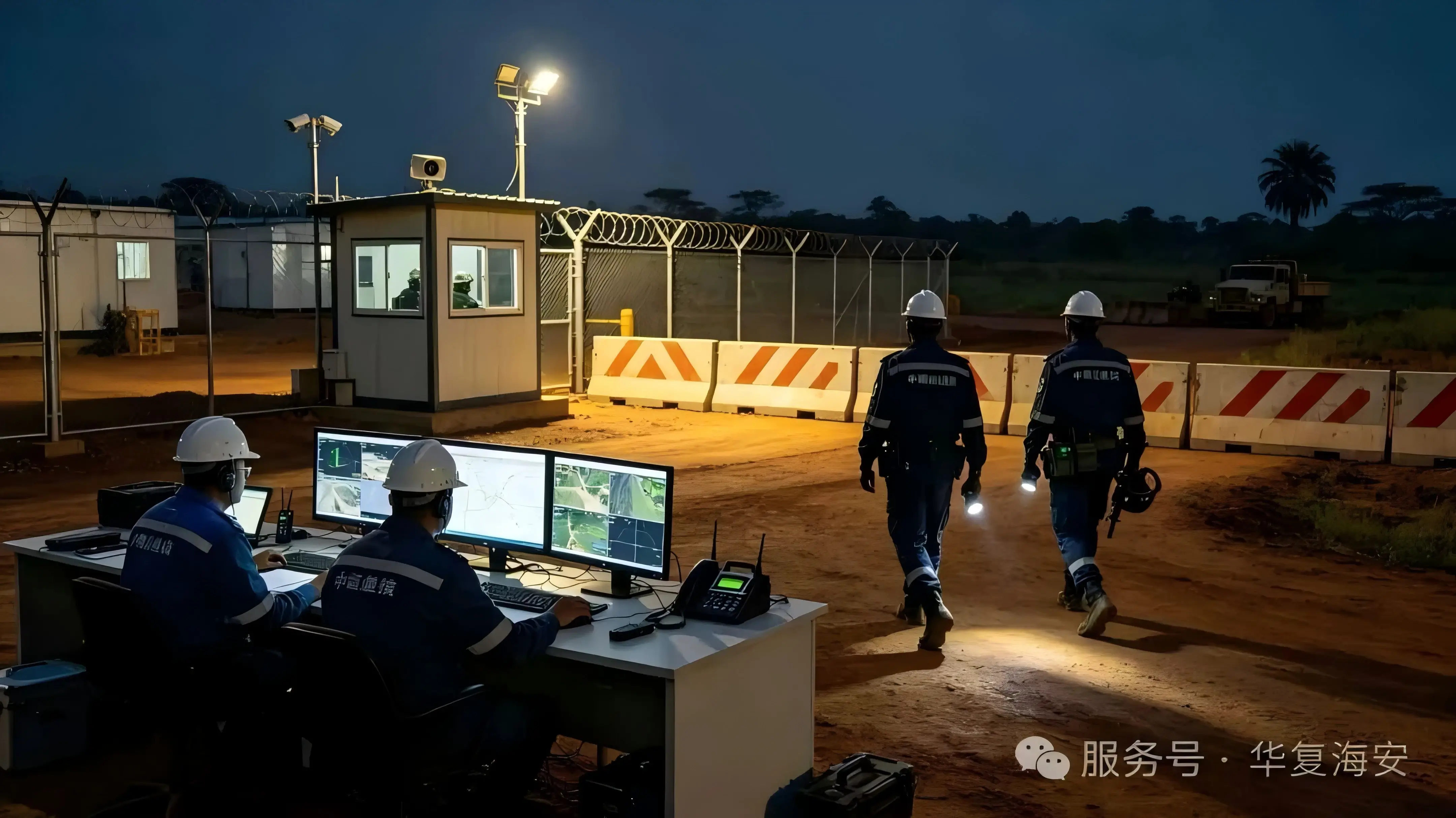
VI. Practical Test and Governance Insights
Observations of recent security practices in Chinese-funded projects in Africa show that under the traditional fragmented, experience-based security model, the vast majority of armed attacks, material looting, and personnel trapping incidents stem from missing risk anticipation, delayed response mechanisms, unbalanced local relations, and weak defensive systems. In contrast, projects adopting a full-cycle, systematic armed security model—through advance intelligence early warning, tiered three-dimensional defense, deep integration of technology and manpower, compliant standardized operations, and normalized local governance—can significantly reduce the incidence of security emergencies and greatly improve crisis response efficiency and risk control. Industry practice fully demonstrates that the core competitiveness of security governance in high-risk African regions lies not in force suppression and passive confrontation, but in systematic, proactive, and compliant risk management capabilities. The optimal governance outcome of security work is to achieve early risk resolution through systematic governance, prevent security incidents from occurring, and contain the spread of crisis situations, which is also the core goal of the professional and modern transformation of overseas security.
VII. Conclusion
The security situation in high-risk African regions has undergone structural and fundamental changes, and the traditional passive, experience-based, and fragmented security model can no longer adapt to the new risk challenges of Chinese enterprises' international operations. The essence of the modernization transformation of overseas armed security is the upgrading of security work from a logistics-affiliated business to a core value of strategic risk management capability. The armed security system constructed in this paper—full-cycle embedding, tiered prevention and control, compliance safeguards, and capability empowerment—systematically clarifies the security risk mechanisms, theoretical framework, compliance boundaries, core capabilities, and practical implementation paths of overseas projects in Africa, forming a governance paradigm with both theoretical depth, academic value, and practical guiding significance. In the future, security development for Chinese-funded projects in Africa must adhere to the core principles of proactive anticipation, systematic prevention and control, compliant operation, and normalized governance, building a solid bottom line for personnel and asset security with systematic security capabilities, and safeguarding Chinese enterprises' high-quality and sustainable international operations overseas. This paper is written based on publicly available industry information and professional practice analysis, does not involve confidential intelligence of specific countries, and is suitable for industry exchange and strategic reference.
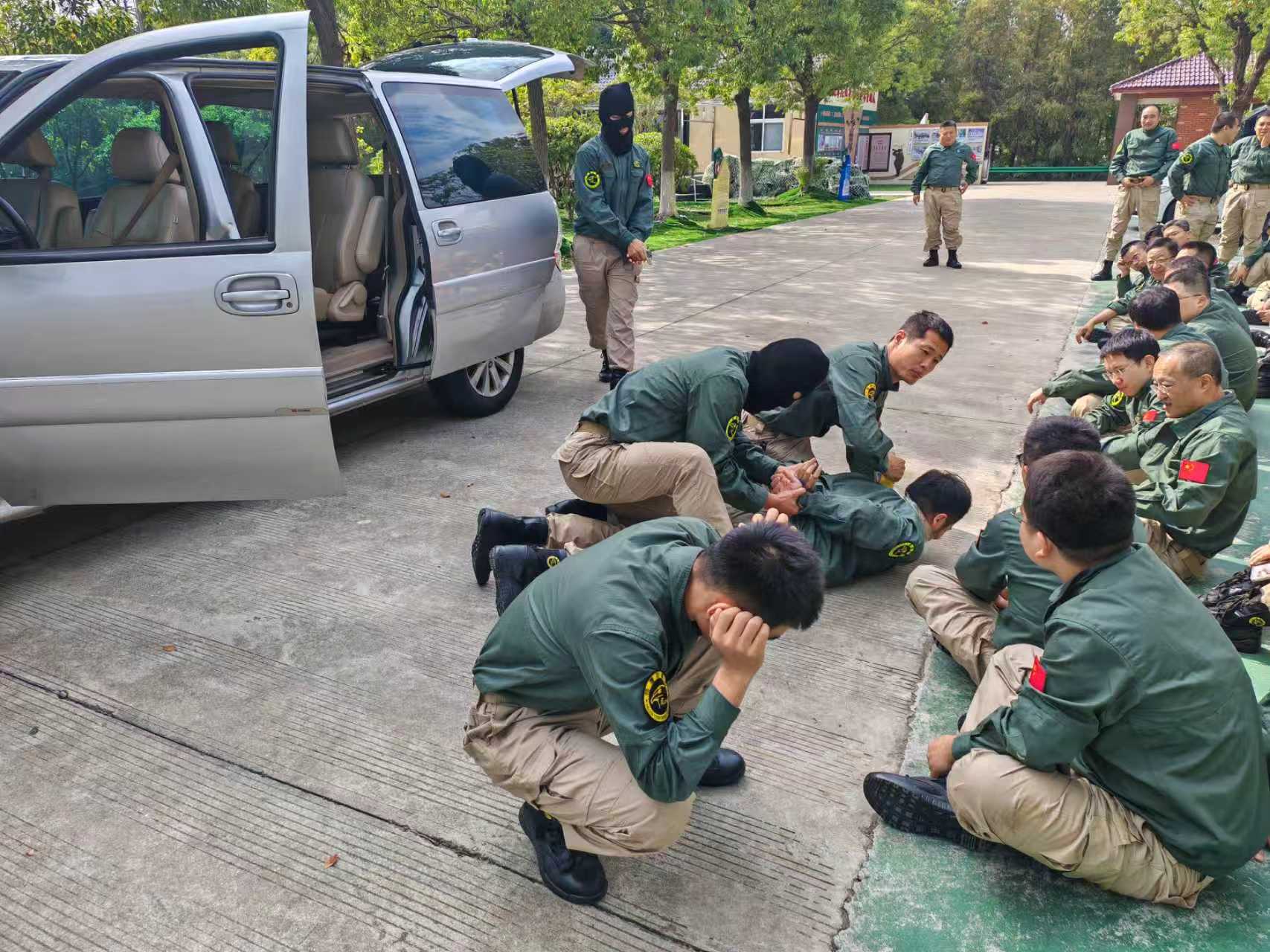

 OVERSEAS SECURITY AUDIT & ASSESSMENT
Before Going Global, Conduct a Security Assessment First
From pre-departure risk assessment to security management of overseas projects, we provide full support for corporate operations and personnel safety.
 Tel 18901559097
 Email sznsps@126.com